PCOS vs PMS: Understanding the Key Differences, Symptoms, and Treatment Options
Short answer
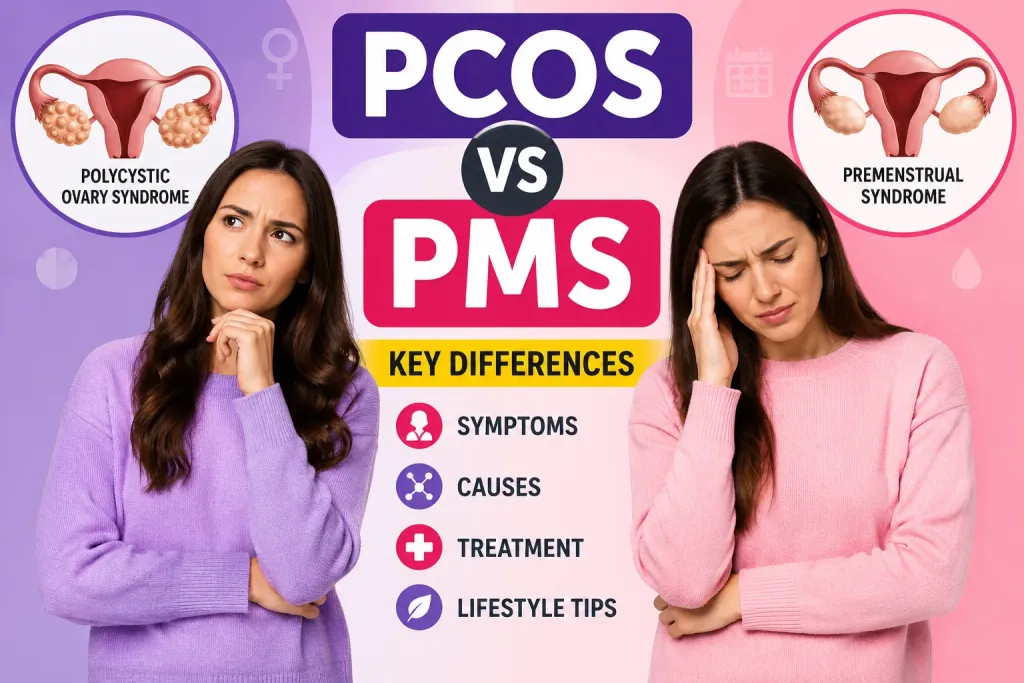
Many women experience hormonal changes throughout their lives, but conditions like Polycystic Ovary Syndrome (PCOS) and Premenstrual Syndrome (PMS) are often misunderstood or confused with one another. While both can affect mood, energy levels, and menstrual cycles, they are distinct conditions with different causes, symptoms, and treatment approaches.
Introduction
Many women experience hormonal changes throughout their lives, but conditions like Polycystic Ovary Syndrome (PCOS) and Premenstrual Syndrome (PMS) are often misunderstood or confused with one another. While both can affect mood, energy levels, and menstrual cycles, they are distinct conditions with different causes, symptoms, and treatment approaches.
Understanding the difference between PCOS and PMS is essential for proper diagnosis and effective management. In this guide, we’ll explore the symptoms, causes, diagnosis methods, treatment options, and lifestyle changes that can help improve overall hormonal health.
Table of Contents
What is PCOS?
Polycystic Ovary Syndrome (PCOS) is a hormonal disorder that affects women during their reproductive years. It is characterized by hormonal imbalances, irregular ovulation, and metabolic issues that may impact fertility and long-term health.
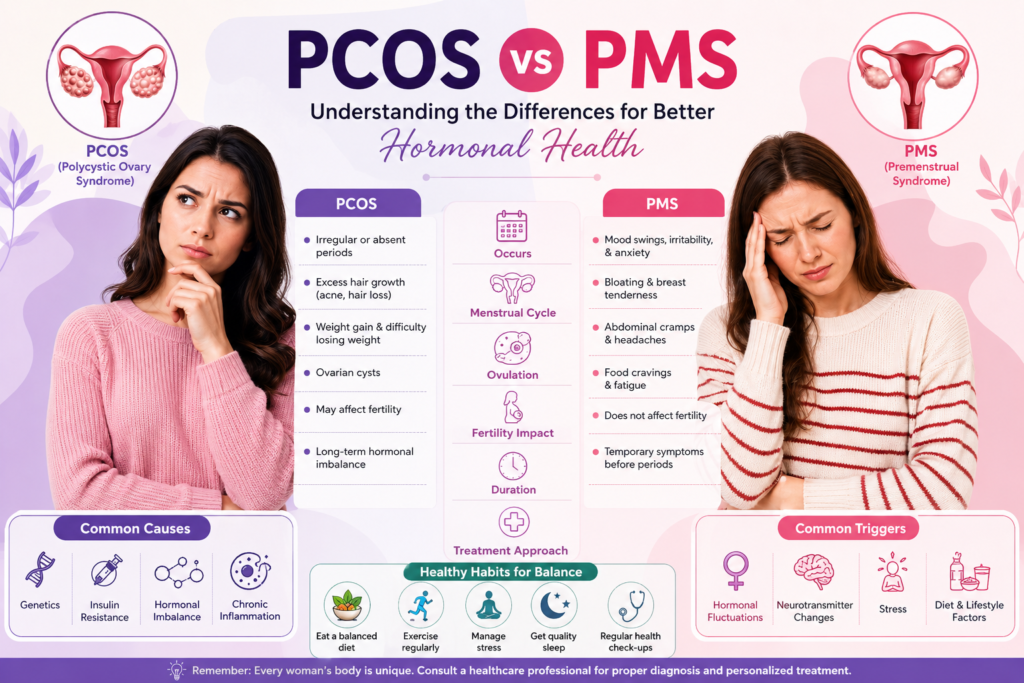
Common Symptoms of PCOS
Women with PCOS may experience:
- Irregular or absent periods
- Weight gain or difficulty losing weight
- Excess facial or body hair growth
- Acne and oily skin
- Thinning hair or hair loss
- Fertility difficulties
- Insulin resistance
- Dark skin patches around the neck or underarms
- Ovarian cysts visible on ultrasound
Symptoms may vary significantly from one individual to another.
What is PMS?
Premenstrual Syndrome (PMS) refers to a group of physical, emotional, and behavioral symptoms that occur in the days or weeks before menstruation begins.
PMS is extremely common and affects many women to varying degrees.
Common PMS Symptoms
Typical symptoms include:
- Mood swings
- Irritability
- Anxiety
- Fatigue
- Bloating
- Breast tenderness
- Food cravings
- Headaches
- Difficulty concentrating
- Mild abdominal discomfort
Unlike PCOS, PMS symptoms usually disappear shortly after menstruation starts.
PCOS vs PMS: Key Differences
| Factor | PCOS | PMS |
|---|---|---|
| Condition Type | Hormonal disorder | Menstrual-cycle related syndrome |
| Frequency | Ongoing condition | Monthly occurrence |
| Menstrual Cycle | Often irregular | Usually regular |
| Ovulation | Frequently disrupted | Normal ovulation |
| Fertility Impact | Can affect fertility | Usually does not impact fertility |
| Duration | Long-term condition | Temporary symptoms before menstruation |
| Insulin Resistance | Common | Rare |
| Excess Hair Growth | Common | Uncommon |
| Ovarian Cysts | May occur | Not associated |
Although some symptoms overlap, the underlying causes differ considerably.
Causes of PCOS
The exact cause of PCOS remains unclear, but experts believe several factors contribute:
Hormonal Imbalance
Higher levels of androgens (male hormones) may interfere with normal ovulation.
Insulin Resistance
Many women with PCOS have reduced insulin sensitivity, leading to elevated insulin levels and increased androgen production.
Genetics
Family history appears to increase the likelihood of developing PCOS.
Chronic Inflammation
Low-grade inflammation may contribute to hormonal and metabolic disturbances.
Causes of PMS
PMS is believed to result from hormonal fluctuations that occur during the menstrual cycle.
Possible contributing factors include:
- Changes in estrogen and progesterone levels
- Neurotransmitter fluctuations, especially serotonin
- Stress and anxiety
- Sleep disturbances
- Nutritional deficiencies
- Lifestyle factors
Symptoms typically occur during the luteal phase of the menstrual cycle.
Can PCOS Be Mistaken for PMS?
Yes. Early symptoms of PCOS may resemble PMS, especially:
- Mood changes
- Fatigue
- Acne
- Weight fluctuations
- Food cravings
However, persistent menstrual irregularities, fertility concerns, excessive hair growth, and long-term hormonal imbalance are more suggestive of PCOS rather than PMS.
Women experiencing recurring symptoms should seek medical evaluation for accurate diagnosis.
How Doctors Diagnose PCOS
Healthcare providers may use several diagnostic tools:
Medical History
Review of menstrual patterns, symptoms, and family history.
Blood Tests
Hormone levels, blood sugar, insulin, and cholesterol may be assessed.
Pelvic Ultrasound
Imaging can identify ovarian cysts and evaluate ovarian structure.
Physical Examination
Assessment of acne, hair growth patterns, weight changes, and other symptoms.
How PMS is Diagnosed
PMS diagnosis is generally based on:
- Symptom tracking
- Menstrual cycle history
- Physical examination
- Exclusion of other medical conditions
Many healthcare providers recommend maintaining a symptom diary for at least two menstrual cycles.
Treatment Options for PCOS
Treatment depends on symptoms and individual health goals.
Lifestyle Modifications
Lifestyle improvements are often the foundation of PCOS management.
These include:
- Regular physical activity
- Balanced nutrition
- Weight management
- Adequate sleep
- Stress reduction
Medical Treatments
Doctors may prescribe:
- Hormonal contraceptives
- Ovulation-support medications
- Insulin-sensitizing medications
- Acne treatments
Treatment should always be personalized under medical supervision.
Treatment Options for PMS
PMS management focuses on symptom relief.
Dietary Changes
Reducing excessive sugar, processed foods, caffeine, and sodium may help alleviate symptoms.
Exercise
Regular movement can support mood and reduce fatigue.
Stress Management
Meditation, yoga, and relaxation techniques may improve emotional well-being.
Medical Support
Healthcare providers may recommend medications depending on symptom severity.
Best Diet for Hormonal Health
A balanced diet can support overall hormonal function.
Foods to Include
- Leafy green vegetables
- Whole grains
- Lean protein sources
- Healthy fats
- Berries and antioxidant-rich fruits
- Nuts and seeds
Foods to Limit
- Sugary beverages
- Highly processed foods
- Excess refined carbohydrates
- Trans fats
Healthy nutrition supports both PCOS management and PMS symptom control.
Lifestyle Tips for Managing Hormonal Imbalances
Prioritize Sleep
Aim for consistent, high-quality sleep every night.
Stay Active
Regular exercise supports hormonal balance and metabolic health.
Manage Stress
Chronic stress can worsen hormonal fluctuations.
Maintain Healthy Weight
Weight management may improve insulin sensitivity and reproductive health.
Regular Health Checkups
Routine evaluations help monitor hormonal and metabolic health.
Frequently Asked Questions
Is PCOS the same as PMS?
No. PCOS is a long-term hormonal disorder, while PMS consists of temporary symptoms that occur before menstruation.
Can PMS cause irregular periods?
PMS itself typically does not cause irregular periods. Persistent irregular cycles may indicate an underlying condition such as PCOS.
Does PCOS always cause infertility?
Not necessarily. Many women with PCOS successfully conceive with appropriate treatment and lifestyle support.
Can diet help both PCOS and PMS?
Yes. Balanced nutrition may improve hormonal regulation, energy levels, and overall symptom management.
When should I see a doctor?
Seek medical advice if you experience:
Persistent irregular periods
Difficulty becoming pregnant
Excessive hair growth
Severe menstrual symptoms
Significant hormonal changes
Conclusion
Although PCOS and PMS share certain symptoms, they are fundamentally different conditions. PMS is a temporary syndrome associated with the menstrual cycle, while PCOS is a chronic hormonal disorder that can affect reproductive and metabolic health.
Recognizing the differences between PCOS and PMS allows women to seek appropriate care, adopt healthy lifestyle habits, and improve long-term well-being. Early diagnosis and proactive management remain essential for maintaining hormonal balance and overall health.
Also Read